
Protect Your Dog (& Your Stuff) At Home
Whether you need to keep your dog in the yard, block off areas of the house for a new puppy or dog, protect floors or furniture, reduce visual or sound stimulation, some of these lesser-known tools can be quite helpful.
Indoor Barriers and Exercise Pens
Most dog owners expect to use a crate with puppies or new dogs. But, pens and gates are overlooked and valuable tools, too. For example, many dogs acclimate to crate training more easily with a crate placed within a pen or pet gated area.
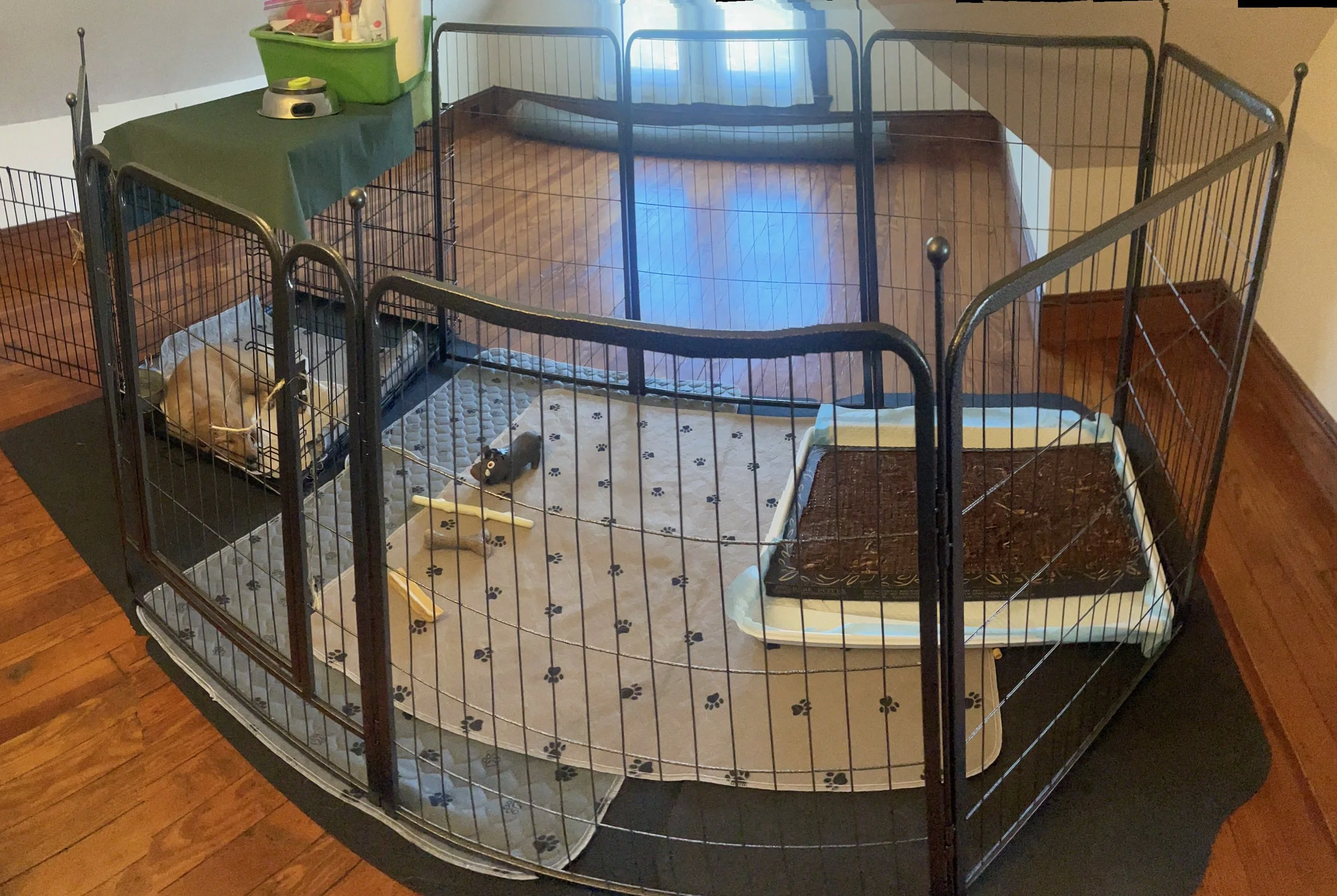
Sample indoor puppy pen
Doorway Pet Gates, Extra Wide
Floor Protection
G-Floor Mats: use under pens, crates or slippery floors
Peel and stick stair treads: aids safety, mobility and joint health on uncarpeted stairs
Outdoor Fencing
For outdoor spaces, from small patios to larger yards, you’ll need a safe way to keep your dog contained while still allowing your dog to move freely, play, sniff, go to the bathroom, etc. A sturdy, physical fence that prevents climbing, jumping or digging under is always the best bet, since both “invisible” electric fences and “tie outs” come with some serious risks and pitfalls. When your fencing options are limited, or you need alternative or additional barriers, the options below can be very helpful.
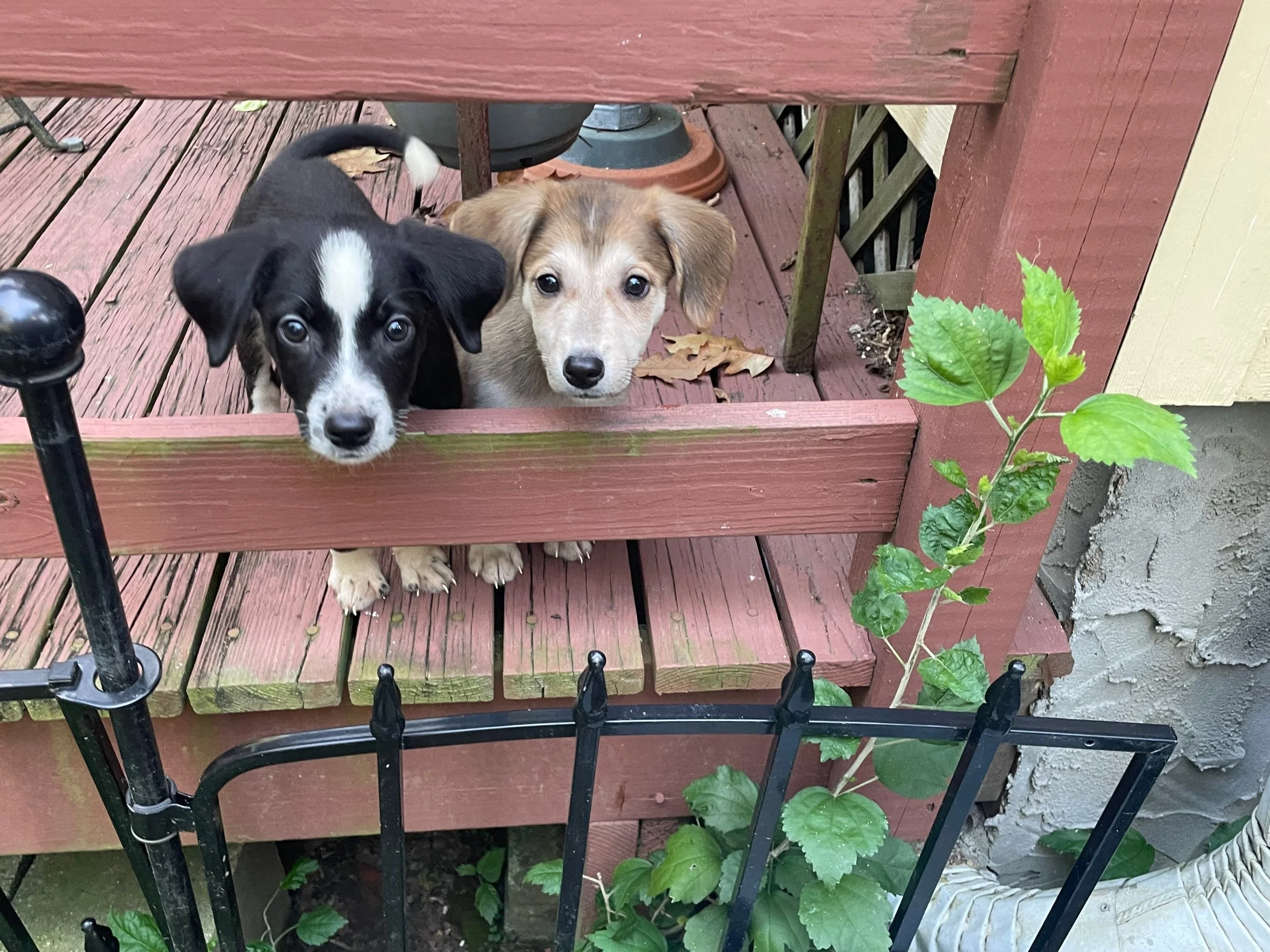
“No Dig” fencing installation-in-progress
Coyote Roller for climbers
Furniture and Windows
Keeping your pets off your nice furniture or reducing visual triggers (like, squirrels and dog walkers) are everyday changes that can be challenging to implement. Some simple tools can help.
Miscellaneous
Give your puppy or new dog secured nearby while you are occupied (e.g. working at a desk, watching t.v., eating dinner) as part of a larger training plan to teach them to settle next to you. A 3-4ft. “chew proof” tether may be helpful, provided you do this safely and appropriately.
IMPORTANT! Use indoors, with direct adult supervision for brief periods only. No dog should ever be left unattended while tethered. May not be appropriate for dogs with aggressive behaviors.